
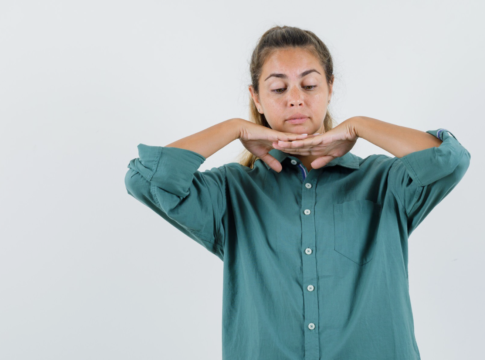
If your jaw aches by noon, your cortisol is telling you something urgent.
KEY STATISTICS
- Roughly 31% of adults report regular jaw clenching or teeth grinding, with peak prevalence in the 35–44 age bracket — American Academy of Orofacial Pain.
- Chronic bruxism is associated with a 40% higher self-reported stress burden compared to non-grinders, according to research published in the Journal of Oral Rehabilitation.
- Elevated evening cortisol levels have been directly linked to increased nighttime bruxism frequency in multiple polysomnographic studies — NIH National Library of Medicine.
You wake up with a dull ache behind your eyes, your molars feel oddly tender, and your jaw is tight before you have even reached for your phone. This is not a dental quirk or a sleep position problem. Your jaw is one of the most sensitive physiological stress gauges your body has, and right now, it is running in the red.
What Cortisol Does to Jaw
When your brain perceives threat — whether that is a looming deadline or a difficult conversation — the hypothalamic-pituitary-adrenal axis floods your system with cortisol and adrenaline. Your muscles contract as part of the ancient fight-or-flight response, and the masseter muscle, the thick jaw muscle responsible for chewing, is one of the first and most powerful to respond.
Bruxism — the clinical term for jaw clenching and teeth grinding — is not a habit you consciously choose. It is a hardwired motor response to sustained autonomic nervous system activation. When cortisol stays elevated across the day and into the evening, the masseter never fully receives the neurological signal to release.
Research using electromyography has shown that people under chronic stress generate up to 250% more jaw muscle activity during sleep than relaxed sleepers. That pressure, applied night after night, creates microfractures in tooth enamel, inflames the temporomandibular joint, and triggers referred headache pain through the trigeminal nerve — the largest cranial nerve in the face.
Why Your 40s Amplify This
Adults between 35 and 45 sit at a unique cortisol crossroads. Career demands are typically peaking, caregiving responsibilities for both children and aging parents are compounding, and the hormonal shifts of perimenopause or andropause are beginning to alter how the body clears cortisol overnight.
Estrogen and progesterone play a significant modulatory role in pain sensitivity and muscle relaxation. As these hormones begin to fluctuate in the late 30s and early 40s, the jaw’s threshold for tension-related pain drops — meaning the same stress load that felt manageable at 28 now produces measurable physical symptoms by 38.
There is also a cognitive load factor that is rarely discussed. This age group carries what researchers call high allostatic load — the cumulative biological cost of adapting to chronic stressors. The jaw, with its dense concentration of stress-responsive muscle fibers and proximity to the trigeminal system, becomes one of the body’s most visible readout screens for that accumulated burden.
Warning Signs to Watch
- Waking with jaw soreness, facial tightness, or a dull headache concentrated at the temples — especially on weekdays
- Teeth that feel sensitive to temperature or pressure without a clear dental cause
- A clicking, popping, or locking sensation in the jaw joint when you open your mouth wide
- Noticing yourself clenching your jaw during email, driving, or any task requiring concentration
- Neck stiffness or upper shoulder tension that worsens alongside emotional stress — both share the trigeminal-cervical reflex pathway
What Actually Breaks the Cycle
The most effective interventions work by interrupting the cortisol-tension feedback loop at the physiological level, not just the cognitive one. Somatic techniques — body-based approaches that directly signal the nervous system — consistently outperform pure mindfulness for jaw-related tension because they address the motor pathway, not just the thought pattern.
Diaphragmatic breathing is the single highest-evidence intervention for rapidly lowering masseter tension. A 2022 study in the Journal of Clinical Medicine found that six minutes of slow nasal breathing at a rate of five to six breaths per minute significantly reduced subjective jaw tension and salivary cortisol in stressed adults. The mechanism is direct: slow exhalation activates the vagus nerve, which downregulates the sympathetic nervous system and allows the masseter to mechanically release.
Progressive muscle relaxation targeting the face and jaw — deliberately tensing and releasing the masseter, temples, and forehead in sequence — has been shown to reduce bruxism frequency by up to 36% when practiced consistently before sleep. Magnesium glycinate supplementation at 300–400mg in the evening is increasingly supported by research as a muscle relaxant that specifically reduces nocturnal clenching, with one study in Nutrients linking adequate magnesium status to significantly lower masseter EMG activity overnight.
Diet also plays a role that most people overlook. Caffeine consumed after 2pm prolongs cortisol elevation into the evening, directly increasing the window of time during which nighttime clenching occurs. Reducing afternoon caffeine intake is one of the fastest modifiable levers for jaw tension relief.
Your Jaw Reset Action Plan
- Set three phone alarms during your workday labelled ‘jaw check’ — when they fire, consciously part your back teeth and drop your tongue to the roof of your mouth, which mechanically inhibits clenching
- Practice 6-minute box breathing (4 counts in, 4 hold, 4 out, 4 hold) before any high-stakes meeting or stressful task to pre-emptively lower cortisol and masseter activation
- Cut caffeine intake off at 1:30–2pm to prevent evening cortisol prolongation and reduce the nighttime bruxism window
- Add a 5-minute progressive facial muscle relaxation routine to your wind-down routine — tense each facial muscle group for 5 seconds, then release fully, working jaw to forehead
- Ask your dentist about a custom occlusal splint if you have existing tooth sensitivity or jaw joint clicking — it will not stop clenching but protects teeth while you work on the cortisol cycle
The Posture and Sleep Factor
The most underappreciated driver of jaw tension in this age group is screen posture, and its link to cortisol is more direct than most people realise. When your head moves forward of your shoulders — the standard position for laptop and phone use — the suboccipital muscles at the base of the skull shorten, mechanically pulling the mandible upward and increasing resting jaw pressure. This forward head posture also compresses the vagus nerve’s cervical pathway, reducing the parasympathetic brake on your stress response.
This means that poor ergonomics are not just a back problem — they are actively keeping your nervous system in a low-grade stress state throughout the working day. Raising your screen to eye level and performing two to three chin tucks per hour (gently retracting the chin to align the cervical spine) can reduce both jaw muscle activity and cortisol-adjacent symptoms like afternoon fatigue and irritability.
Sleep quality is the other hidden amplifier. When sleep is fragmented or cut short — common in adults managing high cognitive loads — the body’s cortisol clearance is incomplete, meaning you start the following day already stress-primed. A jaw that aches every morning is often a reliable signal that your overnight cortisol regulation needs as much attention as your daytime stress management.
Bottom Line
Your jaw does not lie — persistent tightness, morning aches, and unconscious clenching are measurable signs that your cortisol system is overloaded and your nervous system needs a direct, body-based intervention. The good news is that somatic techniques like slow breathing, progressive muscle relaxation, and simple postural corrections can interrupt this cycle quickly and without a prescription. Start with the jaw check alarm today — your masseter has been sounding the alarm long enough.
Always consult a qualified healthcare provider before making changes to your health routine.
Sources
- Prevalence and risk factors of bruxism in adults: a systematic review — Journal of Oral Rehabilitation
- Association between salivary cortisol levels and sleep bruxism: a polysomnographic study — NIH National Library of Medicine
- Effects of slow-paced breathing on jaw muscle tension and autonomic nervous system activity in stressed adults — Journal of Clinical Medicine
- Magnesium and skeletal muscle relaxation: implications for nocturnal bruxism — Nutrients
- Allostatic load and chronic stress in midlife adults: physiological markers and clinical implications — Harvard Health Publishing
