
*Why preserving mature urban forests matters more for your health than planting new saplings*
KEY STATISTICS
- A Chicago study found that neighborhoods with mature tree canopy showed stronger health outcomes than areas focused on new tree planting alone.
- Research suggests established trees filter air pollutants, reduce urban heat, and support cardiovascular health more effectively than younger plantings.
- People living near mature urban forests experience lower rates of stress-related illness and heat-driven health complications.
You’ve likely heard that planting trees is good for the planet and for us. But a recent study of Chicago neighborhoods challenges what we’ve assumed about which trees actually protect our health most. It turns out that saving the old, established trees already towering over your neighborhood might do far more for your heart, lungs, and stress levels than the well-intentioned saplings cities plant in their place.
If you’re in your late 30s or early 40s, this matters now—because the health benefits of mature urban forests compound over the decades you’ll spend living in them.
Why Mature Trees Work Harder
Mature trees work differently in your body’s ecosystem than younger ones. A fully grown tree has decades of established root systems, thicker canopy coverage, and the metabolic power to filter pollutants, reduce ambient temperature, and stabilize air quality at a scale that a sapling simply cannot match for years.
- Established trees intercept more rainfall, reduce flooding risk, and lower surface temperatures by 2–8°F in surrounding neighborhoods.
- Decades-old canopy coverage creates deeper shade and cleaner air—filtering particulate matter and nitrogen dioxide more effectively than young trees with sparse foliage.
- Mature root systems stabilize soil and regulate moisture, reducing heat island effect that stresses cardiovascular and respiratory systems.
- A single large tree produces the air-cleaning benefit equivalent to dozens of saplings, but only after those saplings grow for 20+ years.
Why Mid-Life Matters Most
By your 40s, your cardiovascular and respiratory systems are no longer as resilient to environmental stressors. Chronic heat exposure, air pollution, and chronic stress from poor urban environmental quality accelerate aging of blood vessels and increase inflammation—exactly the conditions that mature tree canopy directly mitigates.
- Heat-sensitive cardiovascular events (heart attack, stroke) spike during hot seasons; tree canopy reduces surface temperatures and lowers event risk.
- Chronic air pollution exposure compounds respiratory decline in your 40s; mature trees filter particulates before they reach your lungs.
- Stress-induced inflammation and cortisol elevation are worse in barren, hot neighborhoods; mature forests reduce perceived stress and lower cortisol.
- Aging skin and tissues are more vulnerable to UV exposure; established tree cover provides cumulative sun protection that develops over decades.
Signs Your Environment Needs Older Trees
- Unexplained increases in heart palpitations or shortness of breath, especially during warm months or in neighborhoods with sparse tree cover.
- Persistent fatigue and mood decline in summer or in areas with minimal green space and visible heat shimmer.
- Worsening allergies or respiratory symptoms despite no change in individual habits—may indicate neighborhood air quality decline.
- Elevated resting heart rate or blood pressure readings that improve only when you spend time in mature tree-dense parks or neighborhoods.
- Chronic low-grade inflammation markers (if monitored by your doctor) correlating with seasons or time spent in tree-poor areas.
What Actually Protects You
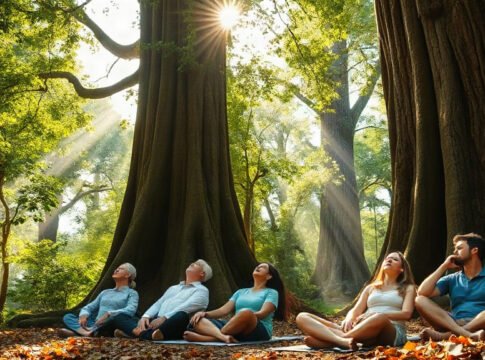
The health gains from mature urban forests come not from a single action, but from prioritizing their preservation in your daily life and community choices. This means advocating against tree removal, spending time under established canopy, and choosing where you live or spend leisure time with tree cover in mind.
- Spend at least 120 minutes weekly under mature tree canopy—in parks, tree-lined neighborhoods, or green corridors—to lower blood pressure and reduce stress hormones.
- Oppose local tree removal projects; advocate for mature tree preservation over new planting initiatives in your neighborhood or workplace.
- Choose walking or biking routes that pass through established tree cover rather than open, hot streets; this reduces heat stress and improves air quality exposure.
- If relocating, prioritize neighborhoods with older, mature trees over newer developments with saplings—the health difference compounds over years.
Start Today Checklist
- Map mature tree coverage in your neighborhood using free tools (Google Maps, city tree inventory databases); identify tree-dense walking routes.
- Attend one local zoning or parks board meeting this month to learn about planned tree removal or preservation projects affecting your area.
- Commit to 20 minutes of outdoor time twice weekly specifically under established tree canopy—during lunch, morning walks, or evening commutes.
- If you own property, maintain mature trees already present; resist pressure to cut for views or construction—their health benefit justifies preservation costs.
- Support or join a local urban forestry advocacy group that prioritizes mature tree protection over new planting alone.
The Planning Problem Nobody Mentions
The overlooked truth is that urban planning often treats tree preservation as less urgent than planting new ones—it’s cheaper, more visible, and politically easier to plant a sapling than to fight removal of a mature tree. But for your health right now, in your 40s, the established forest matters more. Your body doesn’t have 20 years to wait for new trees to mature.
- New tree planting programs are celebrated publicly, but mature tree removal often happens quietly; awareness is the first step to protection.
- Many cities lose more tree canopy to removal than they gain through planting—a net deficit that worsens air quality and heat stress.
- Individual trees matter less than forest continuity; fragmented patches of young trees provide far less health benefit than a connected mature canopy.
- Budget and policy decisions often favor development over preservation; your voice in local planning can shift priorities toward protecting established forests.
Bottom Line
The Chicago research delivers a counterintuitive message worth taking seriously in your 40s: the mature trees already standing over your neighborhood are protecting your cardiovascular health, filtering your air, and reducing your stress in ways that saplings won’t replicate for decades. Rather than waiting for new planting initiatives to mature, focus your energy and advocacy on preserving the established urban forest where you live, work, and exercise. Your heart, lungs, and stress response will thank you immediately—not in 20 years.
HealthyWellbeing — always consult a qualified healthcare provider before making changes to your health routine.
Sources
- Saving old trees may protect people’s health more than planting new ones, study of Chicago neighborhoods finds — Live Science
- Urban green space and health benefits — CDC
- Tree canopy and cardiovascular outcomes — Harvard Health
