
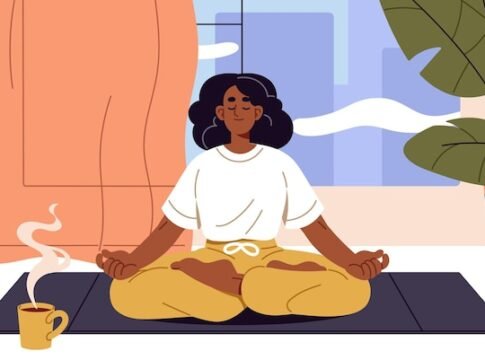
Imagine a serene morning, where instead of waking up to a racing mind, you begin your day with clarity and calm. For many adults over 40, anxiety can disrupt their sense of peace and leave them feeling unsettled. The demands of balancing career, family, and personal health may amplify these feelings, making it vital to find effective ways to manage stress. While some might turn to traditional methods, meditation offers a powerful alternative that has been gaining popularity due to its profound benefits.
Often, the noise of our thoughts can be overwhelming, like a radio on full blast that we just can’t switch off. Yet, within the practice of meditation, there’s an opportunity to quieten these anxieties. By cultivating a meditative practice, you might discover an oasis of tranquility amidst life’s chaos. Lets explore some meditation techniques that could help in easing an anxious mind.
Focused Attention Meditation
In a world rife with distractions, the ability to focus on a single point has become a rare skill. Focused Attention Meditation involves selecting an object of focus, such as your breath, a mantra, or a visual point. By directing your attention to this focal point, you learn to minimize the noise of anxious thoughts.
Begin by finding a comfortable seated position, ensuring your back is straight to facilitate easy breathing.
Choose a simple focal point. Your breath is a convenient choice. Notice the sensations associated with each inhale and exhale.
Whenever your mind wanders, gently bring it back to your chosen point of focus, without judgment.
Research suggests that regularly practicing Focused Attention Meditation can enhance concentration and potentially reduce stress by teaching the brain to release thoughts that trigger anxiety.
Mindfulness Meditation
Mindfulness Meditation invites you to be fully present in the moment, observing your thoughts without getting entangled in them. This technique is often associated with fostering a state of flow and emotional balance, making it particularly effective for managing anxiety.
Set aside a specific time each day, even if its just ten minutes, where you won’t be interrupted.
Adopt an open posture, with hands resting comfortably on your knees or lap.
Focus on your breathing. As thoughts arise, acknowledge them and let them pass like clouds drifting through the sky.
Mindfulness practices are associated with improved emotional well-being and have been shown to help in reducing symptoms of anxiety by emphasizing non-judgmental awareness.
Body Scan Meditation
Are you holding tension in your shoulders or clenching your jaw without realizing it? Body Scan Meditation involves mentally ‘scanning’ your body for areas of tension and purposefully relaxing those muscles.
Lie comfortably on your back, close your eyes, and start by focusing on your toes.
Gradually move your awareness up through your body, noticing the physical sensations in each part.
If you detect any tension, consciously relax the muscle group before moving on.
This meditation can promote a deep sense of relaxation and is believed to enhance awareness of bodily sensations, which can contribute to more conscious stress management.
Guided Imagery Meditation
Sometimes, all you need is an escape, and Guided Imagery Meditation offers a mental journey to a peaceful, serene place. This technique uses visualization to reduce stress and anxiety by transporting you to a calming environment in your mind.
Select a peaceful and safe place youd like to visit perhaps a beach, forest, or meadow.
Using a guided meditation recording or your imagination, picture the details of this place sights, sounds, and smells.
Immerse yourself in the experience, letting it replace stressful thoughts.
Guided Imagery is associated with reduced stress levels and can be a wonderful tool for those who find visualization helpful in achieving relaxation.
Simple Daily Takeaways
Start small: Integrate brief meditation moments into your daily routine.
Remain consistent: Establish a practice that works for you, even if its just a few minutes each day.
Experiment: Try different techniques to see which resonates most with your lifestyle and needs.
Practice patience: Meditation is a skill that grows over time; embrace it as a journey rather than a destination.
