
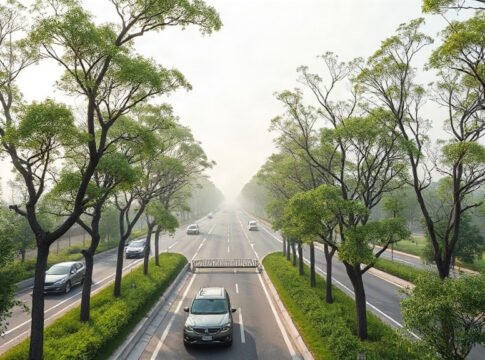
*New research shows green barriers near roads cut dangerous air toxins—and why that matters for your lungs*
KEY STATISTICS
- Trees and bushes planted near highways can significantly reduce particulate air pollution from vehicle exhaust
- Highway-adjacent air pollution has been linked to respiratory disease, cardiovascular problems, and other chronic illnesses
- Adults in midlife are particularly vulnerable to cumulative effects of long-term air pollution exposure
You probably don’t think about the air quality on your commute—but your lungs do. If you live near a busy road, work within earshot of traffic, or spend hours in your car each week, you’re breathing in a cocktail of particulates and gases that research has now directly linked to serious health problems. A new Georgia State University study reveals something surprisingly simple: trees and dense bushes act as a natural filter, significantly reducing the harmful pollution that vehicles pump into the air around you.
Understanding how this works—and what you can do about it—matters more than you might think.
How Trees Filter Toxic Air
Vehicle exhaust contains fine particulates (tiny bits of soot, metals, and chemicals) that penetrate deep into your lungs and bloodstream. Trees and vegetation work as physical and chemical barriers, trapping these particles before they reach you and helping to break down harmful gases over time.
- Leaves and branches physically intercept particulate matter from vehicle exhaust before it disperses into breathing zones
- Vegetation absorbs gases like nitrogen dioxide and sulfur dioxide through leaf surfaces, reducing airborne concentration
- Dense tree canopies create microclimates that slow air movement and encourage particle deposition on surfaces
- Multiple rows of trees provide significantly better filtration than single trees or sparse plantings
Why Midlife Matters Most
If you’re between 35 and 45, you’ve likely spent decades breathing compromised air if you live or work near major roads. At this life stage, the cumulative burden of air pollution exposure begins to show up as inflammation in your airways and cardiovascular system—damage that compounds over time.
- Fifteen to twenty years of highway pollution exposure creates measurable inflammation in lungs and blood vessels
- Your immune system becomes less efficient at clearing particulates as you age, allowing deeper lung penetration
- Pre-existing conditions (high blood pressure, mild asthma, borderline cholesterol) amplify pollution’s damage in midlife
- This is the decade when air-pollution-related diseases often become clinically detectable
Signs Your Air Quality May Be Hurting You
- Persistent morning cough or throat clearing when you first go outside or drive in traffic
- Shortness of breath during normal activity that wasn’t present five years ago
- Increased sinus congestion, post-nasal drip, or recurring respiratory infections in winter months
- Chest tightness or mild discomfort after driving on congested highways (especially in hot weather)
- Fatigue or reduced exercise tolerance that correlates with high-pollution days or after commuting
Practical Steps to Reduce Exposure
While you can’t plant trees on the highway yourself, you can reshape your relationship with polluted air through smarter daily choices. Where you live, work, and spend your time matters—and sometimes a few intentional changes add up to real protection.
- Commute during off-peak hours or use non-highway routes when possible to reduce your exposure window
- Keep car windows closed and use recirculated air mode in heavy traffic to filter incoming pollution
- If you have a choice of neighborhoods, prioritize areas with mature trees, parks, and distance from major roads
- Indoor air quality matters: use HEPA filters in your home, especially in bedrooms, if you live near busy roads
Your Air Quality Action Plan
- Map your regular routes: identify which commutes or outdoor activities expose you to the heaviest traffic pollution
- Check your local air quality index daily (use EPA’s AirNow app) and plan outdoor exercise on low-pollution days
- Advocate for green infrastructure in your community—contact local officials about tree-planting initiatives near highways
- Create a green buffer at home: plant trees, shrubs, or a living wall near street-facing windows if you own property
- Talk to your doctor about baseline lung screening if you’ve lived near busy roads for more than 10 years
- Consider an air quality monitor for your home to track indoor levels and adjust ventilation accordingly
The Often-Missed Timing Factor
One overlooked factor is the timing of your exposure. Traffic pollution peaks during morning and evening rush hours, but also accumulates on hot, still days when air doesn’t circulate. Adjusting *when* you exercise or spend time outdoors can be as important as where you do it.
- Morning rush hour (6–9 a.m.) and evening peak (4–7 p.m.) concentrate pollution; plan outdoor exercise outside these windows
- Hot, windless summer days trap pollution close to roads; cooler, breezy days allow better air dispersal
- Weekend mornings typically have cleaner air than weekday mornings due to reduced traffic volume
- Real-time air quality apps help you time outdoor activities to minutes when pollution dips near your location
Bottom Line
The Georgia State study confirms what our lungs have been telling us: proximity to highway pollution matters, and green barriers work. You can’t always move away from busy roads, and you can’t single-handedly plant a forest. But you can be intentional about timing your outdoor time, protecting your indoor air, and advocating for the tree canopy your community needs.
In midlife, these choices compound into real protection for your lungs and heart.
HealthyWellbeing — always consult a qualified healthcare provider before making changes to your health routine.
Sources
- Georgia State study finds that trees, bushes near highways can significantly reduce air pollution — Georgia State University News
- General guidance on air quality and health effects — CDC
- Environmental health and pollution exposure — NIH / NIEHS
