
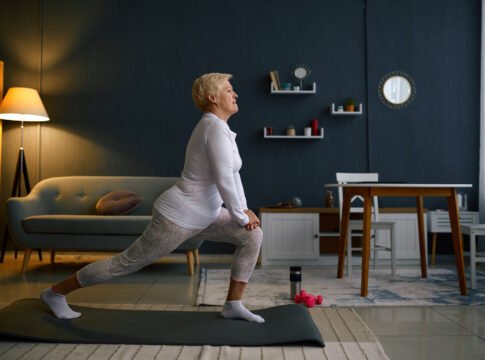
Your evening workout might be sabotaging your deepest sleep phases.
KEY STATISTICS
- 78% of adults who exercise within 4 hours of bedtime report difficulty falling asleep
- Core body temperature stays elevated for 4-6 hours after intense exercise
- Evening workouts can delay REM sleep onset by up to 90 minutes
You finally carved out time for that spin class after work, feeling proud of your commitment to fitness. But three hours later, you’re staring at the ceiling wondering why sleep feels impossible. That evening workout might be working against your body’s natural wind-down process.
Your Body’s Exercise Response
Exercise triggers a cascade of physiological changes that directly conflict with sleep preparation. Your core body temperature spikes during physical activity and takes 4-6 hours to return to baseline. Since your body needs to cool down by 1-2 degrees to initiate sleep, this extended warm-up period delays the onset of drowsiness.
Simultaneously, exercise floods your system with stimulating hormones including cortisol, adrenaline, and endorphins. While these chemicals make you feel energized and accomplished during the day, they create the opposite effect your brain needs for sleep. Cortisol levels, which should naturally decline in the evening, remain elevated for hours after intense physical activity.
Your circadian rhythm relies on predictable temperature fluctuations and hormone cycles to trigger sleep phases. Evening exercise essentially sends mixed signals to your internal clock, telling it to stay alert when it should be preparing for rest.
Why This Age Struggles
Adults in their late thirties and early forties face unique challenges with exercise timing and sleep quality. Your metabolism begins slowing around age 35, meaning your body takes longer to process and clear stress hormones from your system. What might have been a quick recovery in your twenties now requires extended downtime.
Busy schedules often push workout times later in the day for this age group. Between work demands, family responsibilities, and social commitments, evening hours become the only available window for exercise. Unfortunately, this timing coincides with declining sleep efficiency that naturally occurs with aging.
Hormonal changes during this life stage also affect your body’s ability to regulate temperature and stress response. Women approaching perimenopause and men experiencing gradual testosterone decline find their recovery systems less resilient to evening exercise disruption.
Exercise Sleep Disruption Signs
- Lying awake for more than 30 minutes after your usual bedtime following evening workouts
- Feeling wired or mentally alert despite physical exhaustion after late exercise
- Experiencing restless sleep with frequent wake-ups on nights after evening gym sessions
- Needing an extra hour or more of sleep to feel rested after evening workout days
- Noticing increased heart rate or feeling overheated when trying to fall asleep
Smart Exercise Timing Strategies
The solution isn’t abandoning exercise but strategically timing your workouts to support rather than sabotage sleep. Morning or lunchtime exercise provides all the benefits without the sleep interference. If early workouts feel impossible, even shifting from 7 PM to 5 PM can make a significant difference in sleep quality.
When evening exercise is unavoidable, choose lower-intensity activities like gentle yoga, walking, or light stretching. These activities can actually promote sleep by reducing stress and muscle tension without triggering the stimulating hormone response of high-intensity exercise.
Post-workout cooling strategies become crucial for evening exercisers. Take a cool shower, spend time in a cool environment, and avoid heavy meals or stimulating activities immediately after your workout. Creating a deliberate cool-down routine signals to your body that it’s time to begin the transition toward sleep.
Your Sleep-Exercise Action Plan
- Schedule workouts before 2 PM when possible, or at least 4 hours before your target bedtime
- Choose low-intensity activities like yoga or walking if exercising within 3 hours of sleep
- Take a cool shower immediately after evening workouts to accelerate body temperature reduction
- Create a post-exercise wind-down routine with dim lighting and quiet activities
- Track your sleep quality on workout days versus rest days to identify your personal timing threshold
The Temperature Connection
Room temperature becomes a critical but often overlooked factor for post-exercise sleep success. Your bedroom should be 65-68 degrees Fahrenheit, but after evening exercise, consider dropping it to 60-65 degrees to compensate for your elevated core temperature. This simple adjustment can dramatically improve your ability to fall asleep despite the workout.
Timing your last meal also matters more on exercise days. Eating within two hours of exercise can compound the sleep disruption by keeping your digestive system active when it should be slowing down. Plan your dinner at least three hours before evening workouts, or have a light post-workout snack instead of a full meal.
Bottom Line
Evening exercise doesn’t have to destroy your sleep, but it requires strategic planning and realistic expectations. The ideal solution is shifting workouts earlier in the day, but when that’s impossible, choosing gentler activities and prioritizing aggressive cool-down strategies can minimize the sleep impact. Your body will thank you for respecting its natural rhythms.
Always consult a qualified healthcare provider before making changes to your health routine.
Sources
- Effects of Exercise Timing on Sleep Architecture and Nocturnal Blood Pressure — Journal of Clinical Medicine
- Evening Exercise and Sleep Quality in Healthy Adults — Sports Medicine
- Circadian Rhythms and Exercise Performance — Current Biology
