
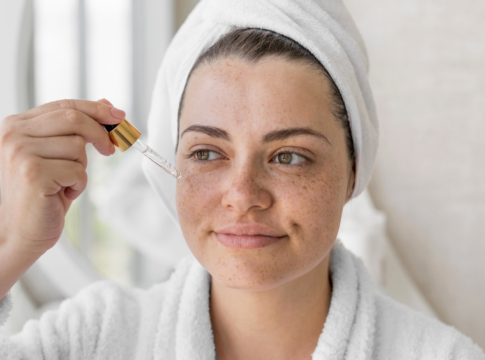
How the right formulation can actually restore your skin’s underlying architecture
KEY STATISTICS
- 67% of adults over 35 show measurable collagen loss in facial skin
- L-ascorbic acid increases collagen production by up to 8-fold when properly absorbed
- Stabilized vitamin C formulations penetrate 3x deeper than basic ascorbic acid
You’ve probably noticed your jawline isn’t as sharp as it used to be, or that your cheeks seem flatter than five years ago. What you’re seeing isn’t just surface-level aging — it’s the breakdown of your skin’s structural foundation. The right vitamin C serum can actually rebuild this lost architecture from the inside out.
How Vitamin C Rebuilds Collagen
Vitamin C functions as a cofactor for prolyl 4-hydroxylase and lysyl hydroxylase, two enzymes essential for stable collagen formation. Without adequate vitamin C, your body produces defective collagen that lacks the cross-linking necessary for firm, lifted skin. This is why scurvy patients historically developed sagging, weakened skin.
When properly formulated vitamin C penetrates the dermis, it triggers fibroblasts to increase both Type I and Type III collagen synthesis. Type I collagen provides structural strength, while Type III adds elasticity and bounce. Together, they create the scaffolding that keeps facial features lifted and defined.
The key lies in molecular stability and delivery. L-ascorbic acid is the most potent form, but it degrades rapidly when exposed to light, air, or water. Magnesium ascorbyl phosphate and ascorbyl glucoside offer better stability but lower potency.
Why Your Thirties Change Everything
Your skin’s natural vitamin C levels drop by approximately 7% per decade after age 30. This decline accelerates the breakdown of existing collagen while simultaneously reducing your ability to build new structural proteins. The result is progressive facial volume loss that becomes increasingly noticeable in your late thirties.
Hormonal changes during this life stage compound the problem. Declining estrogen levels reduce collagen density, while increased cortisol from life stressors breaks down existing collagen faster than it can be replaced. Your skin becomes caught in a destructive cycle.
Sun damage accumulated over decades also depletes dermal vitamin C stores. UV exposure creates reactive oxygen species that consume available vitamin C, leaving less available for collagen synthesis. This explains why sun-exposed areas like the face and neck show the most dramatic structural changes.
Signs Your Structure Is Failing
- Nasolabial folds becoming deeper or more prominent
- Loss of definition along the jawline or chin
- Cheeks appearing flatter or more hollow
- Fine lines forming in areas that were previously smooth
- Skin feeling thinner or less resilient when pinched
Choosing and Using Serums Correctly
Choose serums containing 10-20% L-ascorbic acid in a pH below 3. 5 for maximum penetration. Higher concentrations often cause irritation without additional benefits, while lower concentrations may not provide sufficient collagen-building activity.
Look for dark glass bottles with airtight pumps to prevent oxidation.
Apply vitamin C serum to clean, dry skin in the morning, allowing 10-15 minutes for absorption before applying sunscreen. The antioxidant properties provide additional protection against UV damage throughout the day. Never mix vitamin C with retinol, as the pH differences can destabilize both ingredients.
Pair your serum with vitamin C-rich foods like bell peppers, citrus fruits, and leafy greens. Oral vitamin C supports systemic collagen production, while topical application targets facial skin specifically. The combination provides comprehensive collagen support.
Your Five-Step Implementation Plan
- Purchase a stabilized vitamin C serum with 15% L-ascorbic acid concentration
- Apply every morning to clean skin, avoiding the eye area initially
- Wait 15 minutes before applying moisturizer and SPF 30+ sunscreen
- Start with every other day for one week to assess skin tolerance
- Take progress photos monthly to track structural improvements over 12 weeks
The Application Mistakes Everyone Makes
Most people apply vitamin C serum incorrectly, which dramatically reduces its effectiveness. The serum must be applied to completely dry skin — even residual moisture from cleansing can raise the pH and prevent proper absorption. Pat your skin dry and wait 2-3 minutes before application.
Temperature also matters more than most realize. Store your serum in the refrigerator to slow oxidation and enhance the cooling, tightening sensation upon application. Cold temperatures also cause temporary vasoconstriction, which may improve ingredient penetration.
The timing of application affects results significantly. Morning application provides antioxidant protection throughout the day, but evening application may allow for better absorption since skin repair processes peak during sleep. Consider alternating if your skin tolerates twice-daily use.
Bottom Line
Properly formulated vitamin C serums can genuinely rebuild facial structure by stimulating collagen production at the cellular level. The key is choosing stable formulations, applying them correctly, and maintaining consistent use for at least 12 weeks to see architectural improvements. Your face can regain definition and lift — but only with the right approach.
Always consult a qualified healthcare provider before making changes to your health routine.
Sources
- Vitamin C in dermatology — Journal of the American Academy of Dermatology
- Collagen synthesis and vitamin C requirements — British Journal of Dermatology
- Topical vitamin C formulation stability — International Journal of Cosmetic Science
