
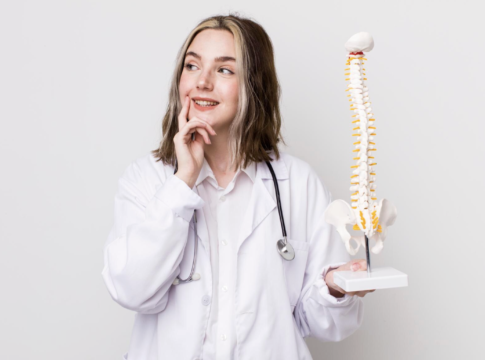
Osteoporosis doesn’t start at 70 — it starts quietly in your late 30s, and your daily habits are either slowing it down or speeding it up.
KEY STATISTICS
- Bone density peaks around age 30 and begins a measurable decline by the late 30s, according to the National Institutes of Health.
- The International Osteoporosis Foundation estimates that 1 in 3 women and 1 in 5 men over 50 will suffer an osteoporosis-related fracture in their lifetime.
- A 2022 study in the Journal of Bone and Mineral Research found that adults who were sedentary in their 30s had significantly lower trabecular bone scores by age 45 compared to those who were moderately active.
Most people think of osteoporosis as an old person’s problem — something to worry about after retirement, if at all. But the truth is harder to ignore: the decade you’re in right now is when the foundation is either being reinforced or quietly crumbling. The choices you make before 45 will determine how your skeleton holds up for the rest of your life.
What’s Happening Inside Bone
Bone is living tissue, constantly being broken down and rebuilt in a process called remodeling. Specialized cells called osteoclasts remove old bone, while osteoblasts lay down new bone in its place.
Until about age 30, your body builds bone faster than it breaks it down, reaching what scientists call peak bone mass. After that tipping point, the balance shifts — breakdown begins to outpace formation, and density starts a slow, silent decline.
The rate of that decline is not fixed. It is directly influenced by hormones, nutrition, mechanical load on the skeleton, and inflammation levels in the body. Understanding this gives you real leverage — because several of those variables are within your control.
Why Your 30s Matter
Adults between 35 and 45 occupy a uniquely vulnerable window that most people are completely unaware of. Estrogen and testosterone — both critical for maintaining bone density — begin their gradual decline during this decade, accelerating bone loss well before menopause or andropause fully arrives.
For women especially, the perimenopause years that often begin in the early 40s can trigger bone loss of up to 2% per year, according to the NIH. That may sound small, but compounded over five to ten years, it represents a structural change that no supplement can fully reverse.
Men are not exempt. Low testosterone, increasing sedentary behavior, and chronic stress-driven cortisol elevation all chip away at male bone density during this decade. The problem is almost never diagnosed until a fracture occurs.
Warning Signs to Watch
- A fracture that occurs from a minor fall or impact — such as breaking a wrist stepping off a curb — which suggests bone is already weaker than expected for your age
- Noticeable loss of height over time, even just 1–2 centimetres, which can indicate vertebral compression from thinning spinal bones
- Persistent, dull back pain with no clear muscular cause, particularly in the mid or lower spine, which may signal early vertebral changes
- Receding gum line or loose teeth, since jaw bone density often mirrors skeletal bone health and can be an early visible indicator of wider bone loss
- A family history of osteoporosis or hip fractures in a parent, which significantly elevates your own risk and warrants earlier screening conversations with your doctor
Habits That Protect Bone
Weight-bearing exercise is the single most powerful lifestyle tool for preserving bone density. When your skeleton experiences mechanical load — through walking, running, resistance training, or even jumping — it signals osteoblasts to lay down new bone tissue in response.
Resistance training in particular has strong evidence behind it. A meta-analysis published in the Journal of Bone and Mineral Research found that progressive resistance training significantly improved bone mineral density at the hip and spine in adults aged 35 to 65.
Calcium and vitamin D remain the nutritional cornerstones of bone health. Adults in this age group need approximately 1,000 mg of calcium daily — ideally from food sources like dairy, fortified plant milks, leafy greens, and canned fish with bones — not from high-dose supplements, which carry their own risks.
Vitamin D is the often-missed co-factor: without it, your gut cannot absorb calcium efficiently regardless of how much you consume. Most adults in northern latitudes are deficient without realising it, and a simple blood test can confirm your levels.
Two habits that silently accelerate bone loss deserve more attention than they typically receive. Excessive alcohol consumption — more than 2 drinks per day — directly inhibits osteoblast activity. Smoking has been shown in multiple studies to reduce bone density and increase fracture risk independently of other factors.
Your Bone Health Checklist
- Do at least 3 sessions per week of weight-bearing or resistance exercise — squats, lunges, brisk walking, or strength training all count and all stimulate bone formation
- Get your vitamin D levels tested at your next GP or physician visit, and discuss supplementation if your serum 25(OH)D falls below 50 nmol/L
- Aim to meet your daily calcium needs through food first — two to three servings of calcium-rich foods daily will typically cover your requirements without supplementation risk
- If you smoke, treat quitting as a direct bone health intervention — not just a cardiovascular one — because the skeletal impact is significant and begins reversing within months of stopping
- Ask your doctor about a DEXA scan baseline, particularly if you have a family history of osteoporosis, have been on long-term corticosteroid medication, or are a woman entering perimenopause
The Stress and Sleep Factor
Cortisol is the overlooked bone thief that almost no one talks about in this context. Chronically elevated cortisol — the kind produced by sustained work stress, poor sleep, and relentless mental load — directly suppresses osteoblast activity and accelerates bone breakdown.
Research published in the Journal of Clinical Endocrinology and Metabolism has shown that even moderately elevated cortisol over time is associated with significantly lower bone mineral density, independent of other lifestyle factors. This means that managing stress is not optional when it comes to bone health — it is structural.
Sleep is where much of your body’s bone repair and hormonal regulation occurs. Adults consistently sleeping fewer than 6 hours per night have been shown to have measurably lower bone density than those sleeping 7 to 8 hours, according to research published in the Journal of Bone and Mineral Research. Treating sleep as a biological priority — not a productivity sacrifice — protects far more than your energy levels.
Bottom Line
Your bones are not a passive structure waiting to give out — they are responsive, living tissue that responds to how you eat, move, sleep, and manage stress starting right now in your 30s and 40s. The window to make a meaningful difference is open today, not after a fracture forces your hand. Small, consistent changes to exercise, nutrition, sleep, and stress load will compound into real structural protection over the decade ahead.
Always consult a qualified healthcare provider before making changes to your health routine.
Sources
- Bone Health and Osteoporosis: A Report of the Surgeon General — NIH Office of the Surgeon General
- Effects of Progressive Resistance Training on Bone Mineral Density in Aging Adults — Journal of Bone and Mineral Research
- Cortisol Excess and Bone Loss: Evidence from Clinical Studies — Journal of Clinical Endocrinology and Metabolism
- Sleep Duration and Bone Mineral Density in Community-Dwelling Adults — Journal of Bone and Mineral Research
- Osteoporosis: Epidemiology, Diagnosis and Treatment — International Osteoporosis Foundation
